Think snoring is always harmless? In many people, occasional snoring is simply an annoyance. But frequent, loud snoring—especially when accompanied by pauses in breathing, choking, or gasping—can be a warning sign of obstructive sleep apnea (OSA).
Sleep apnea repeatedly interrupts breathing during sleep and can prevent you from getting the deep, restorative sleep your brain and body need. Many people do not even realize their breathing is being disrupted during the night.
Quick Answer: When Should Snoring Be a Concern?
Snoring deserves medical attention when it occurs frequently and is accompanied by symptoms such as:
-
Pauses in breathing during sleep
-
Gasping or choking at night
-
Excessive daytime sleepiness
-
Morning headaches
-
Difficulty concentrating
-
Waking with a dry mouth
-
Feeling tired despite sleeping through the night
Not everyone who snores has sleep apnea, and not everyone with sleep apnea snores. However, persistent loud snoring combined with these symptoms should be evaluated.
What Is Obstructive Sleep Apnea?
Obstructive sleep apnea, commonly called OSA, occurs when the upper airway repeatedly narrows or closes while a person is sleeping.
When this happens, airflow may decrease or temporarily stop even though the body is still trying to breathe. Oxygen levels can fall, and the brain briefly wakes the person enough to reopen the airway.
These awakenings may be so brief that the person does not remember them.
The cycle can repeat many times throughout the night, interfering with normal sleep.
Why Does Sleep Apnea Cause Snoring?
During sleep, muscles in the throat naturally relax.
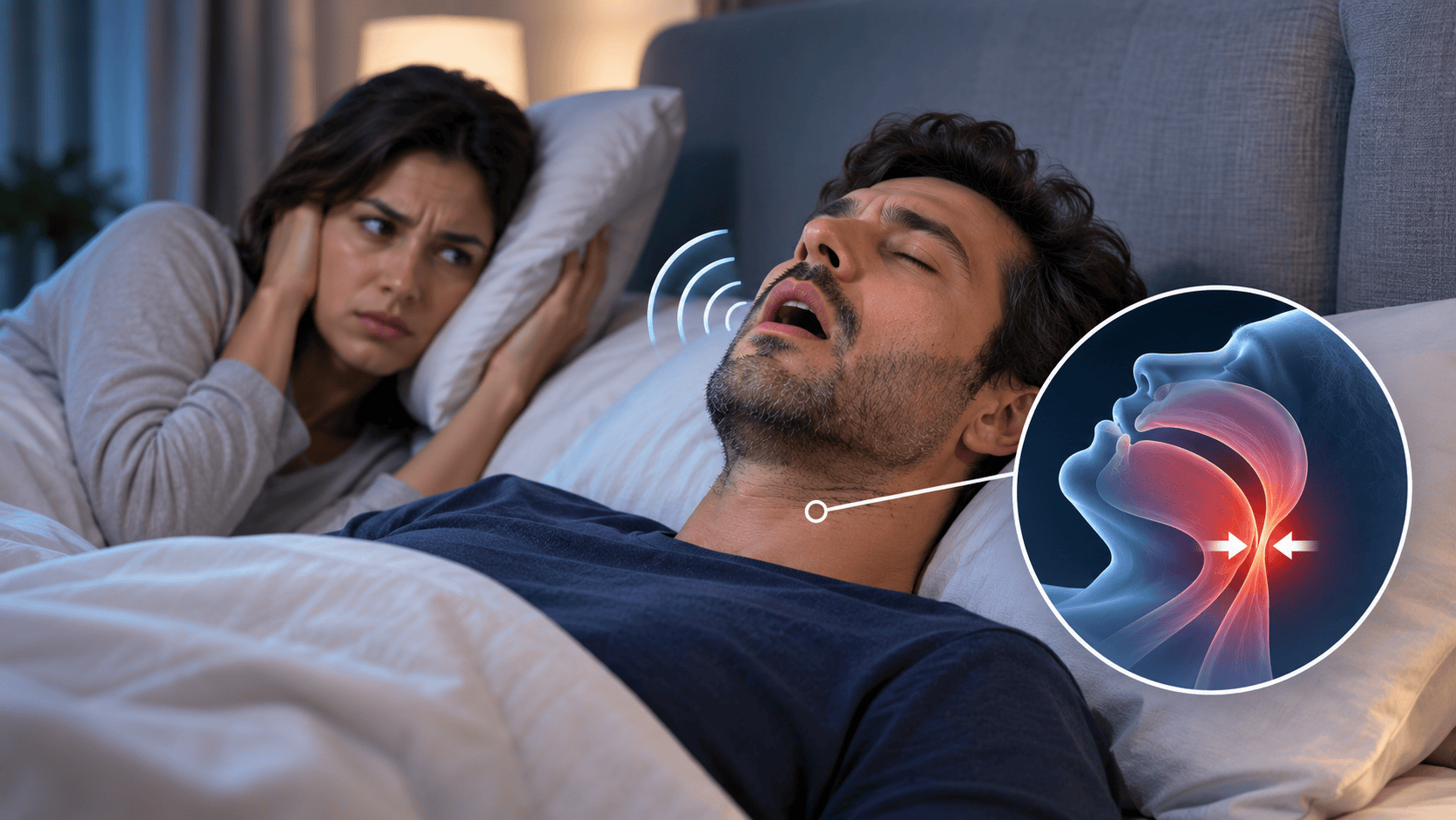
In people with obstructive sleep apnea, the tissues in the throat can relax enough to narrow or block the airway. As air moves through the narrowed passage, surrounding tissues may vibrate and create loud snoring.
Snoring associated with sleep apnea may sometimes follow a pattern of:
Loud snoring → silence or breathing pause → gasping or choking → snoring again.
A bed partner may notice this pattern before the person experiencing it does.
What Are Common Signs of Sleep Apnea?
Symptoms During Sleep
Watch for:
-
Loud, frequent snoring
-
Breathing that repeatedly stops and starts
-
Gasping or choking
-
Restless sleep
-
Frequent awakenings
These symptoms are often noticed by a spouse or family member.
Symptoms During the Day
Poor-quality sleep can affect how you feel after waking.
Possible symptoms include:
-
Excessive daytime sleepiness
-
Persistent fatigue
-
Morning headaches
-
Difficulty concentrating
-
Problems with attention or reaction time
-
Irritability or mood changes
Sleep apnea-related daytime sleepiness can become significant enough to interfere with work, daily activities, and even driving.
How Can Sleep Apnea Affect the Brain?
Healthy sleep is important for attention, memory, mood, and normal brain function.
When sleep is repeatedly interrupted, patients may experience:
-
Difficulty focusing
-
Slower reaction time
-
Daytime sleepiness
-
Problems learning or concentrating
-
Mood changes
These symptoms may sometimes be mistaken for simple fatigue or stress.
Who May Be at Higher Risk?
Several factors can increase the likelihood of obstructive sleep apnea.
These may include:
-
Excess body weight
-
A naturally narrow airway
-
Enlarged tonsils or other airway structures
-
Increasing age
-
Certain anatomical features affecting the throat
-
Some hormonal or medical conditions
However, sleep apnea can occur in people who do not fit the typical risk profile, so symptoms remain important.
How Is Sleep Apnea Diagnosed?
If symptoms suggest sleep apnea, a healthcare professional may recommend a sleep study.
A sleep study can monitor factors such as:
-
Breathing patterns
-
Oxygen levels
-
Heart rate
-
Sleep stages
-
Snoring
-
Body movements
Some studies are performed overnight in a sleep center, while selected patients may qualify for home sleep apnea testing.
The appropriate test depends on your symptoms and medical history.
How Is Obstructive Sleep Apnea Treated?
Treatment depends on the severity of sleep apnea and the individual patient.
Possible approaches may include:
Lifestyle Changes
Some patients may benefit from:
-
Weight management when appropriate
-
Changing sleep position
-
Avoiding alcohol close to bedtime
-
Improving sleep habits
CPAP Therapy
Continuous positive airway pressure (CPAP) uses gentle air pressure through a mask to help keep the airway open during sleep.
It is a commonly used treatment for obstructive sleep apnea.
Oral Appliances
Certain patients may benefit from dental devices designed to reposition the jaw or tongue and help keep the airway open.
Other Treatments
Depending on the cause and severity, additional procedures or treatments may sometimes be recommended.
Treatment should be individualized after proper diagnosis.
Is All Snoring Sleep Apnea?
No.
People can snore because of:
-
Nasal congestion
-
Sleep position
-
Relaxed throat tissues
-
Alcohol use
-
Anatomical differences in the nose or throat
Occasional snoring does not automatically mean you have sleep apnea.
The concern increases when snoring is frequent, unusually loud, or associated with breathing pauses, gasping, or significant daytime sleepiness.
Frequently Asked Questions
No. Snoring is common and can occur without sleep apnea. However, loud snoring combined with breathing pauses, gasping, or excessive daytime sleepiness should be evaluated.
Yes. Many people are unaware of nighttime breathing interruptions because the brief awakenings may not be remembered. A partner may be the first person to notice breathing pauses or gasping.
Sleep apnea can repeatedly interrupt normal sleep without fully waking you. As a result, you may spend enough hours in bed but still fail to get consistently restorative sleep.
Yes. Daytime sleepiness from sleep apnea can contribute to difficulty focusing, learning, and reacting normally.