
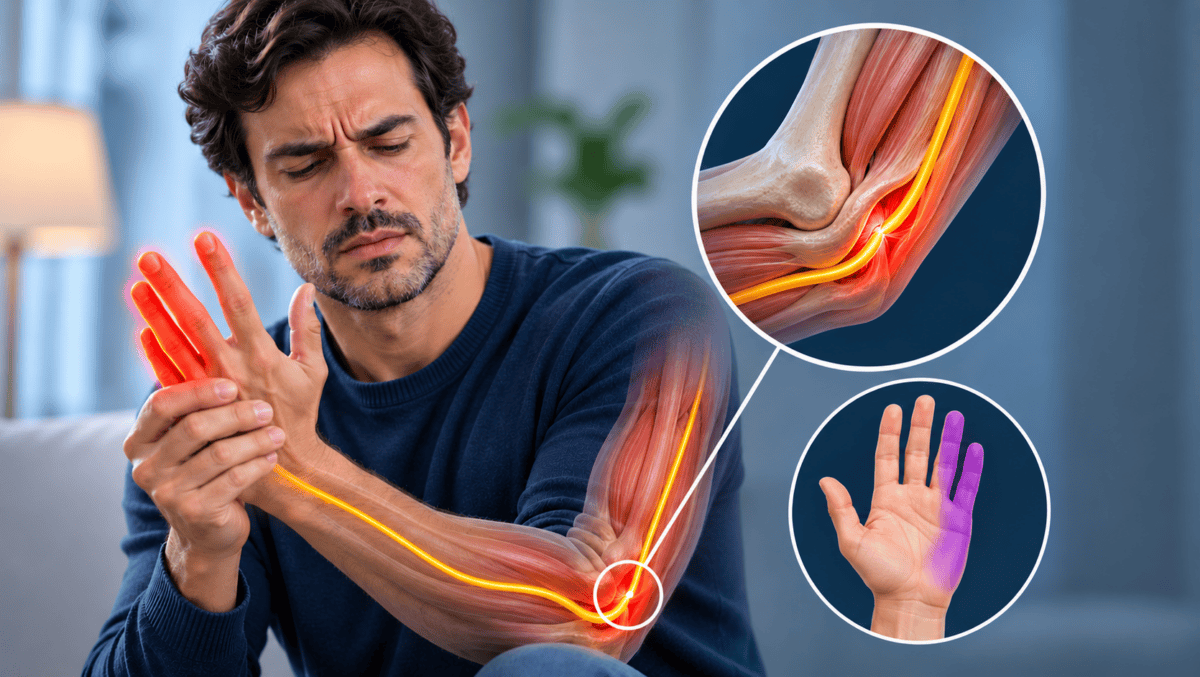
Numbness or tingling in the ring and little fingers can sometimes come from irritation or compression of the ulnar nerve, one of the major nerves that travels from the neck through the arm and into the hand.
When this nerve becomes compressed around the elbow, the condition is commonly called cubital tunnel syndrome. Symptoms may start occasionally and become more noticeable with prolonged elbow bending or pressure on the elbow.
Quick Answer: What Is Ulnar Nerve Entrapment?
The ulnar nerve helps provide sensation to the little finger and part of the ring finger and also controls several muscles involved in hand and finger movement.
It passes through a narrow area on the inside of the elbow called the cubital tunnel. Compression or irritation in this area can cause numbness, tingling, pain, weakness, or reduced hand coordination.
What Does Ulnar Nerve Entrapment Feel Like?
Common symptoms include:
-
Numbness in the little finger
-
Tingling in the ring and little fingers
-
Pins-and-needles sensations
-
Pain or aching around the inside of the elbow
-
Weak grip
-
Hand clumsiness
-
Difficulty with fine finger movements
Symptoms often become worse when the elbow remains bent for a long time, such as while sleeping, driving, or holding a phone.
Why Does the Ring and Little Finger Become Numb?
Different nerves supply sensation to different areas of the hand.
The ulnar nerve primarily supplies sensation to the little finger and part of the ring finger. When it is compressed, symptoms tend to follow that nerve’s pathway rather than affecting the entire hand.
This pattern can help distinguish ulnar nerve problems from conditions such as carpal tunnel syndrome.
What Causes Ulnar Nerve Compression?
Pressure on the ulnar nerve can develop for several reasons.
Common contributors include:
-
Keeping the elbow bent for long periods
-
Frequently leaning on the elbow
-
Repetitive bending and straightening
-
Previous elbow injury
-
Swelling around the joint
-
Arthritis or bone spurs
-
Repetitive work or sports activities
In some patients, there may be no obvious single cause.
Why Are Symptoms Sometimes Worse at Night?
Many people sleep with their elbows bent.
Holding the elbow in this position for several hours can stretch or compress the ulnar nerve, which may cause nighttime or early-morning tingling and numbness.
If symptoms frequently wake you from sleep, it may be worth discussing them with a healthcare professional.
Can Ulnar Nerve Entrapment Cause Hand Weakness?
Yes.
The ulnar nerve also controls muscles involved in grip strength and finger coordination.
More significant compression may cause:
-
Difficulty gripping objects
-
Frequently dropping things
-
Trouble opening containers
-
Difficulty typing
-
Problems fastening buttons
-
Reduced finger coordination
In advanced cases, prolonged nerve compression may contribute to muscle wasting in parts of the hand.
Is It the Same as Carpal Tunnel Syndrome?
No.
Both conditions involve nerve compression, but they affect different nerves.
Ulnar Nerve Entrapment
Usually affects:
-
Little finger
-
Part of the ring finger
-
Grip and finger coordination
Carpal Tunnel Syndrome
Usually affects the median nerve and more commonly causes symptoms involving the:
-
Thumb
-
Index finger
-
Middle finger
-
Part of the ring finger
Knowing which fingers are affected can provide useful clues about the source of the problem.
Could the Numbness Be Coming From Your Neck?
Yes.
A compressed nerve in the cervical spine can sometimes cause numbness, tingling, or weakness extending into the arm and hand.
Other possibilities include:
-
Peripheral neuropathy
-
Wrist-level ulnar nerve compression
-
Other nerve injuries
-
Less commonly, conditions involving the brain or spinal cord
This is why persistent hand numbness should not always be assumed to come from the elbow.
How Is Ulnar Nerve Entrapment Diagnosed?
A neurological evaluation may include examining:
-
Sensation in the fingers
-
Grip strength
-
Hand and finger movement
-
Reflexes
-
Muscle strength
-
The elbow and wrist
Your doctor may also ask which positions or activities make the symptoms worse.
What Are EMG and Nerve Conduction Studies?
When the diagnosis is unclear or symptoms are persistent, EMG and nerve conduction studies may be recommended.
These tests can help determine:
-
Which nerve is affected
-
Where the compression is occurring
-
How well the nerve is functioning
-
Whether muscle function has been affected
Additional imaging, such as ultrasound or MRI, may sometimes be used depending on the suspected cause.
How Is Ulnar Nerve Entrapment Treated?
Treatment depends on the severity and duration of symptoms.
Activity Changes
Reducing pressure on the elbow can help.
This may include:
-
Avoiding leaning on the elbow
-
Taking breaks from repetitive movements
-
Changing desk or workstation positioning
-
Limiting prolonged elbow bending
Night Splinting
A brace or splint may help keep the elbow from remaining tightly bent while sleeping.
Therapy
Physical or occupational therapy may include exercises, posture adjustments, and nerve-gliding techniques.
Medication
Pain-relieving or anti-inflammatory medication may sometimes be recommended when appropriate.
Surgery
Surgery may be considered when symptoms are severe, progressive, or associated with significant nerve damage or persistent weakness despite conservative treatment.
Frequently Asked Questions
Mild symptoms may improve when pressure on the nerve is reduced. Persistent or worsening symptoms should be evaluated.
Bending the elbow can increase pressure or stretch on the ulnar nerve as it passes through the cubital tunnel.
Yes. More significant compression can interfere with muscles responsible for grip and finger coordination.
Not always. Many patients begin with conservative treatment such as activity modification, splinting, and therapy. Surgery is generally considered when symptoms are severe or continue despite treatment.
EMG and nerve conduction studies can help identify where the nerve is affected and evaluate the severity of nerve dysfunction.