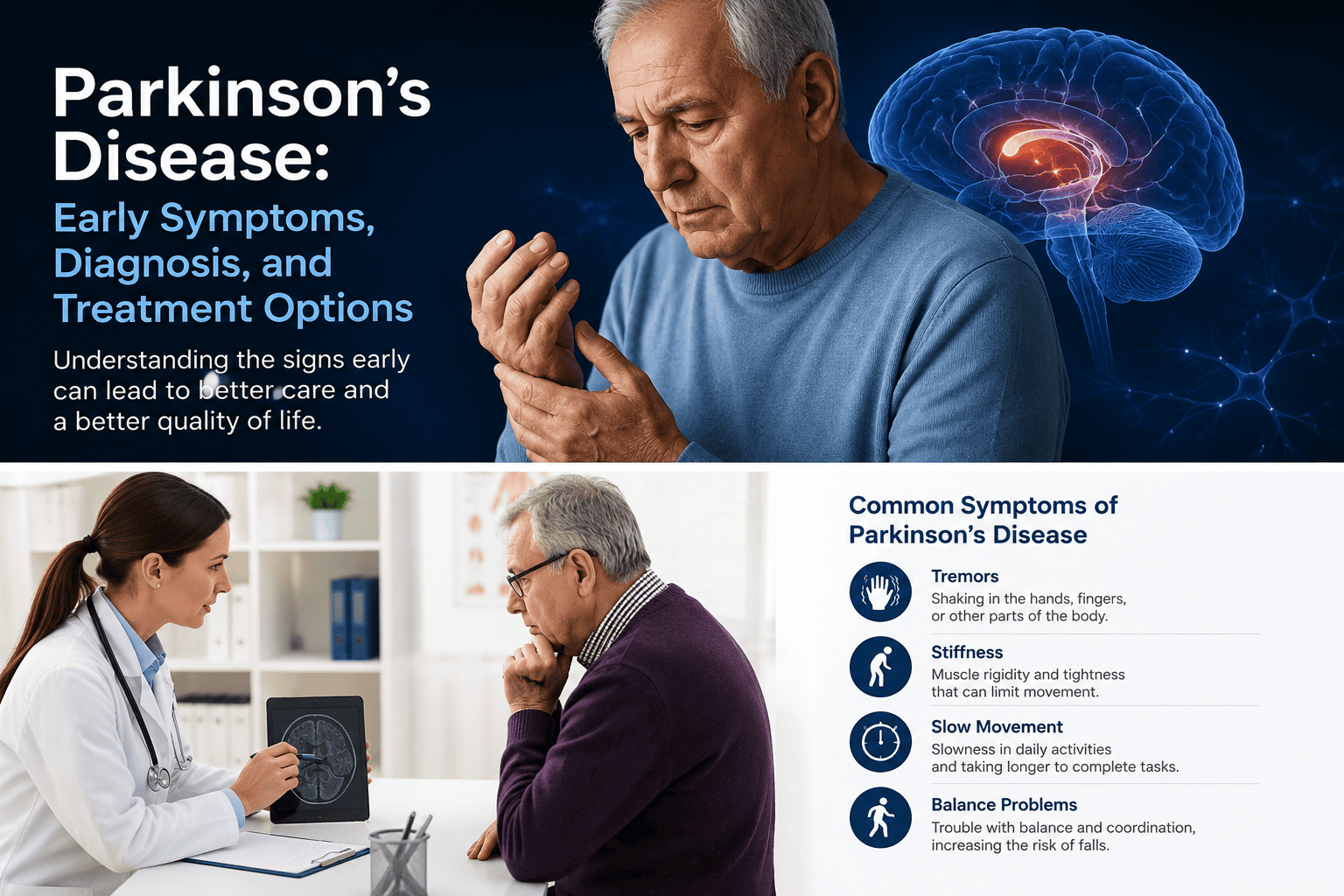
Parkinson’s disease is a progressive neurological condition that primarily affects movement. It develops when nerve cells responsible for producing dopamine become damaged or stop functioning properly. Dopamine helps the brain coordinate smooth and controlled movements, so reduced dopamine levels can lead to tremors, stiffness, slower movement and balance difficulties.
Symptoms usually develop gradually and can vary significantly from one person to another. Recognising the early signs and seeking medical advice can help individuals receive appropriate care and manage their symptoms more effectively.
Early Symptoms of Parkinson’s Disease
Parkinson’s disease does not always begin with severe shaking or difficulty walking. The first symptoms may be mild, affect only one side of the body or be mistaken for normal aging.
1. Tremor
A tremor is an involuntary shaking movement that commonly begins in the hand, fingers, thumb, jaw or leg. A Parkinson’s-related tremor often occurs while the affected body part is resting and may become less noticeable during purposeful movement.
However, not everyone with Parkinson’s develops a tremor, and shaking can also be caused by stress, certain medications, excessive caffeine or other medical conditions. A persistent or unexplained tremor should therefore be evaluated by a healthcare professional.
2. Muscle Stiffness
People with Parkinson’s may experience stiffness or rigidity in the arms, legs, shoulders, neck or trunk. The muscles may feel tight and uncomfortable, making it difficult to move freely.
Stiffness can reduce arm swing while walking, limit facial expressions and make everyday activities such as dressing, turning in bed or getting out of a chair more difficult.
3. Slow Movement
Slowness of movement, medically known as bradykinesia, is one of the main features doctors look for when diagnosing Parkinson’s disease.
A person may begin taking longer to complete routine activities, walk with shorter steps or find it difficult to start moving. Simple tasks such as buttoning a shirt, writing, brushing the teeth or preparing food may gradually require more time and effort.
4. Balance and Walking Problems
Parkinson’s can affect posture, coordination and balance. A person may develop a stooped posture, shuffle while walking, take smaller steps or feel as though their feet are stuck to the floor.
As the condition progresses, difficulty turning, reduced stability and an increased risk of falls may also occur. Balance problems should always be discussed with a doctor, particularly when they are frequent or worsening.
As the condition progresses, difficulty turning, reduced stability and an increased risk of falls may also occur. Balance problems should always be discussed with a doctor, particularly when they are frequent or worsening.
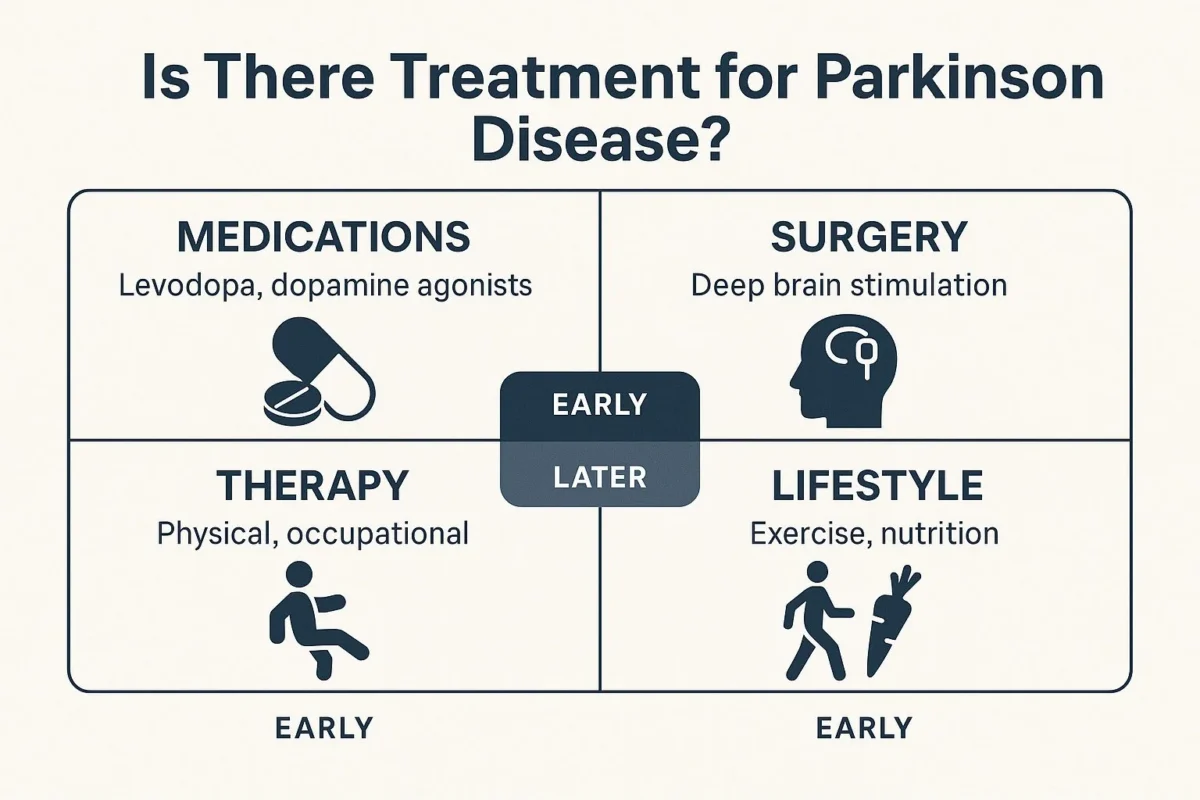
Treatment Options for Parkinson’s Disease
There is currently no cure for Parkinson’s disease, but treatment can help control symptoms, preserve independence and improve quality of life. Treatment plans are personalised according to the patient’s symptoms, age, general health and daily needs.
- Medications
- Physical Therapy and Exercise
- Occupational and Speech Therapy
- Advanced Treatments
Living Well with Parkinson’s Disease
Parkinson’s disease affects every person differently. With the right combination of medical care, exercise, rehabilitation, emotional support and regular follow-up, many people can continue leading active and meaningful lives.
Anyone experiencing persistent changes in movement, balance or coordination should avoid self-diagnosis and schedule an evaluation with a qualified neurologist.
This article is intended for general educational purposes and should not replace personalised medical advice, diagnosis or treatment from a healthcare professional.