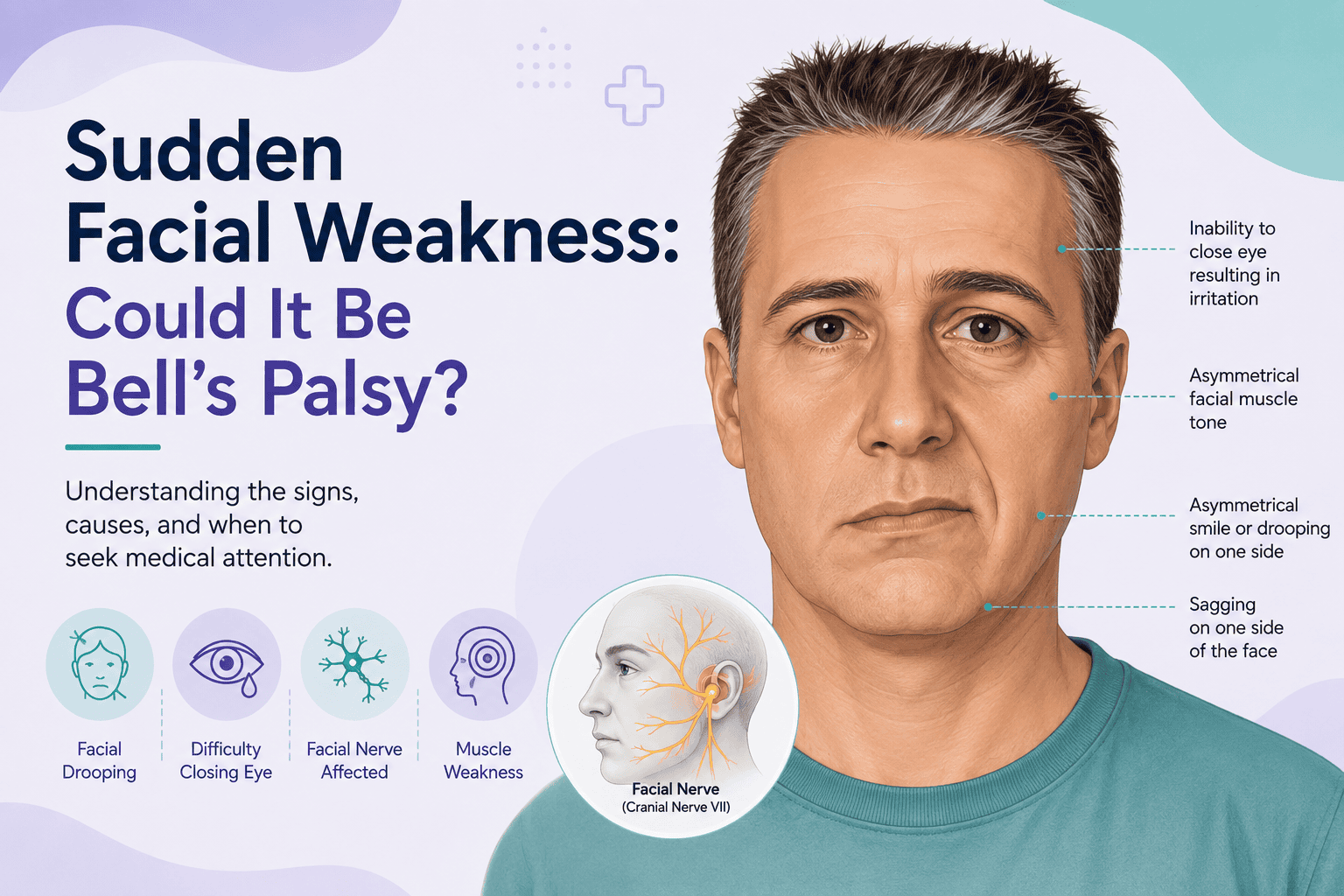
Waking up with one side of your face feeling weak or noticing that your smile suddenly looks uneven can be alarming. Facial weakness can have several causes, including Bell’s palsy, but sudden facial drooping can also be a warning sign of a stroke.
Understanding how the symptoms started and whether other neurological changes are present can help determine how urgently medical care is needed.
What Is Bell’s Palsy?
Bell’s palsy is a condition that causes sudden weakness or temporary paralysis of the muscles on one side of the face.
It occurs when the facial nerve becomes inflamed or swollen. This nerve controls facial expressions and also contributes to functions involving tears, saliva, taste, and some sensations around the ear.
Symptoms usually develop over several hours and often become most noticeable within the first few days.
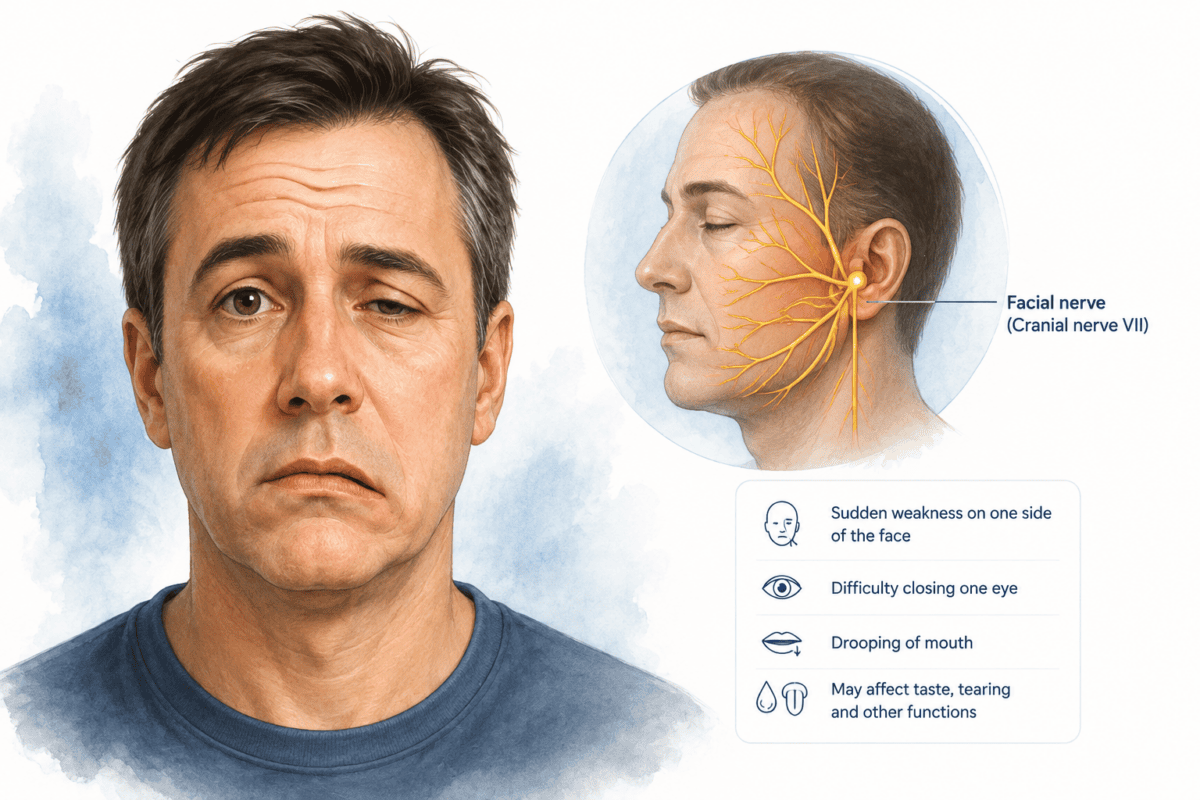
What Does Bell’s Palsy Look Like?
Possible symptoms include:
- Drooping on one side of the face
- Difficulty smiling normally
- Trouble closing one eye completely
- Drooling
- Changes in taste
- Increased sensitivity to sound in one ear
- Pain around the jaw or behind the ear
- Dry eye or excessive tearing
- Difficulty drinking without liquid escaping from the mouth
Bell’s palsy generally affects the entire side of the face, including the forehead.
Bell’s Palsy or Stroke?
This distinction is extremely important.
Bell’s palsy mainly affects the facial nerve, while a stroke can affect several areas of neurological function at the same time.
Seek emergency medical attention immediately if facial drooping occurs with:
- Weakness or numbness in an arm or leg
- Difficulty speaking
- Trouble understanding speech
- Sudden vision changes
- Severe dizziness
- Loss of balance or coordination
- Confusion
- A sudden severe headache
Do not try to determine on your own whether sudden facial weakness is Bell’s palsy or a stroke when other neurological symptoms are present.
What Causes Bell’s Palsy?
The exact cause is not always known.
Bell’s palsy is thought to involve inflammation of the facial nerve, possibly related to the body’s response to certain viral infections.
The swollen nerve can become compressed as it travels through a narrow passage in the skull, temporarily interfering with the signals controlling facial muscles.
How Is Facial Weakness Evaluated?
A clinician may first examine:
- Facial symmetry
- Forehead movement
- Ability to close both eyes
- Smile and mouth movement
- Speech
- Arm and leg strength
- Sensation
- Reflexes
- Balance and coordination
The goal is to determine whether the weakness is limited to the facial nerve or may be part of another neurological condition.
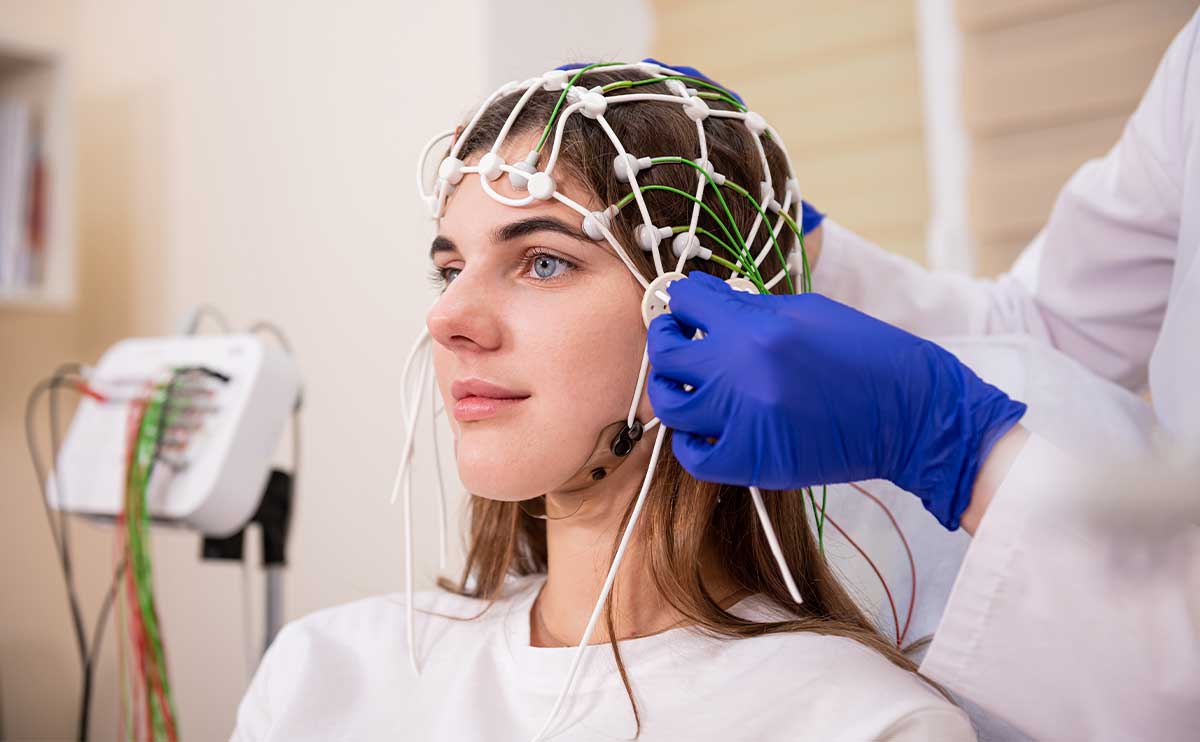
Will You Need an MRI or Other Tests?
Not every patient with typical Bell’s palsy requires imaging.
Additional testing may be considered when:
- Symptoms are unusual
- Weakness progresses slowly rather than suddenly
- Symptoms repeatedly return
- Other neurological abnormalities are present
- There is concern about another condition affecting the facial nerve
Testing may include blood work, MRI, or other neurological studies depending on the clinical findings.
How Is Bell’s Palsy Treated?
Treatment is most effective when started early.
A healthcare professional may prescribe corticosteroid medication to reduce inflammation around the facial nerve. Other treatment may be considered depending on the suspected cause and individual circumstances.
Eye protection is also important when the eyelid cannot close completely.
This may involve:
- Artificial tears
- Lubricating eye ointment
- Protecting the eye while sleeping
- Other measures recommended by an eye-care or medical professional
An unprotected eye can become dry and irritated because normal blinking may be reduced.
How Long Does Recovery Take?
Many people with Bell’s palsy begin improving within several weeks, although complete recovery may take several months.
Recovery depends on the severity of nerve involvement and other individual factors.
Some people may experience lingering facial weakness, involuntary facial movements, or tightness and may benefit from additional specialist evaluation.
When Should You See a Neurologist?
Consider neurological evaluation when:
- Facial weakness is severe
- Symptoms are not beginning to improve
- Weakness continues for an extended period
- Facial paralysis repeatedly returns
- Other neurological symptoms are present
- The diagnosis is uncertain
- Abnormal facial movements develop during recovery
A neurologist can assess whether the facial nerve itself is affected or whether another neurological condition may be contributing to the symptoms.
Sudden Facial Weakness Should Never Be Ignored
Bell’s palsy is a common cause of one-sided facial weakness and many patients recover well. However, sudden facial drooping can also occur with more serious neurological conditions.
If facial weakness begins suddenly—especially when accompanied by arm or leg weakness, speech difficulty, vision changes, or loss of balance—seek emergency medical care immediately.
For facial weakness that has already been evaluated as non-emergent but remains persistent or unexplained, a neurological assessment can help determine the cause and appropriate next steps.
This article is intended for educational purposes and does not replace professional medical advice, diagnosis, or treatment.