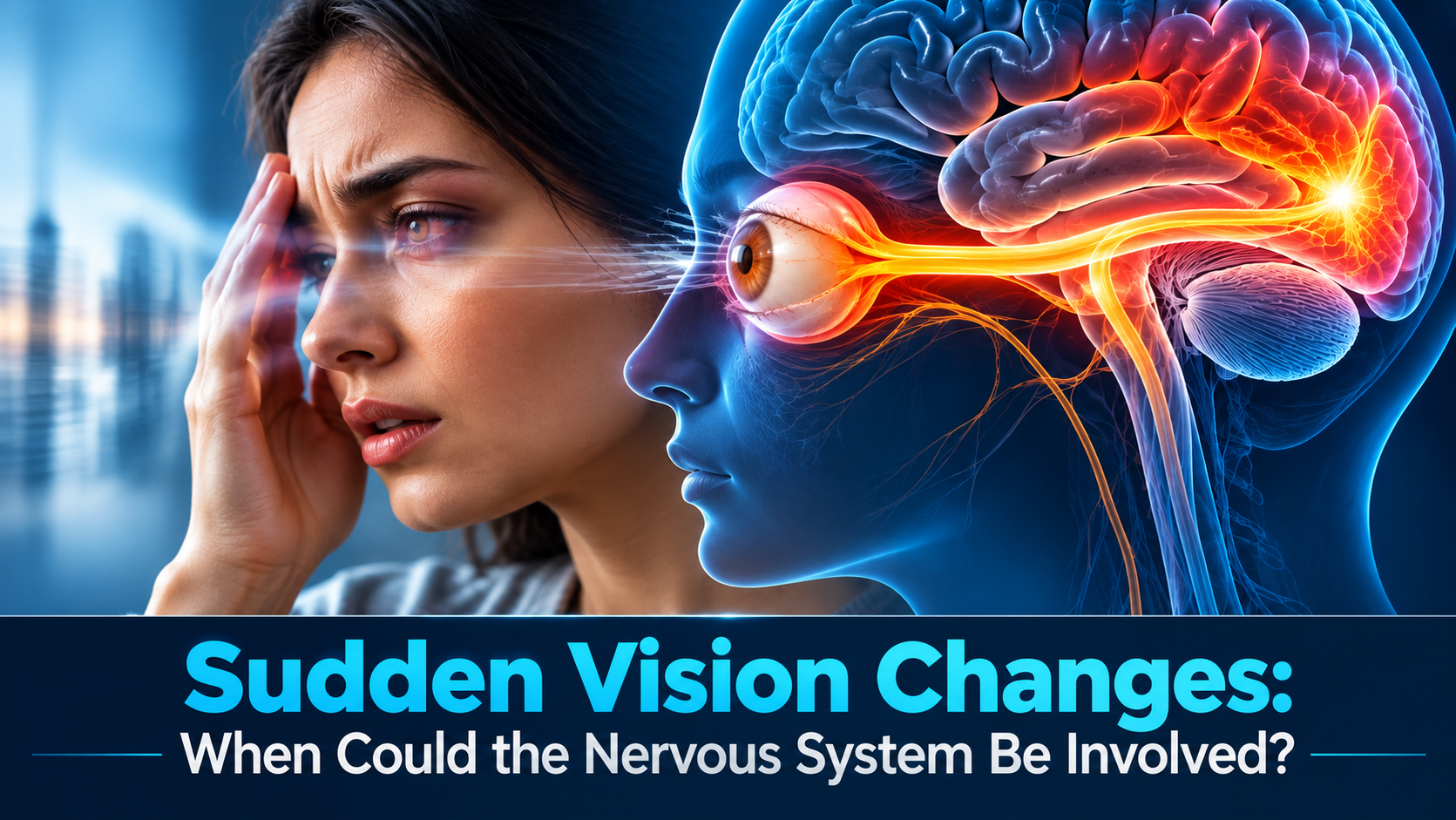
Sudden changes in vision can be alarming. Blurred vision, double vision, flashing lights, loss of part of the visual field, or temporary vision loss may come from the eyes themselves—but sometimes the brain, optic nerves, or other parts of the nervous system are involved.
Because some neurological causes of vision changes require urgent treatment, it is important to understand which symptoms should not be ignored.
How Is Vision Connected to the Nervous System?
Vision depends on more than the eyes.
After light enters the eye, visual information travels through the optic nerves to different areas of the brain, where it is processed into the images we see.
Problems affecting any part of this pathway can potentially cause vision changes, including the:
- Optic nerves
- Brainstem
- Visual areas of the brain
- Cranial nerves controlling eye movement
- Blood vessels supplying the brain and eyes
This is why some vision problems may require neurological evaluation in addition to an eye examination.
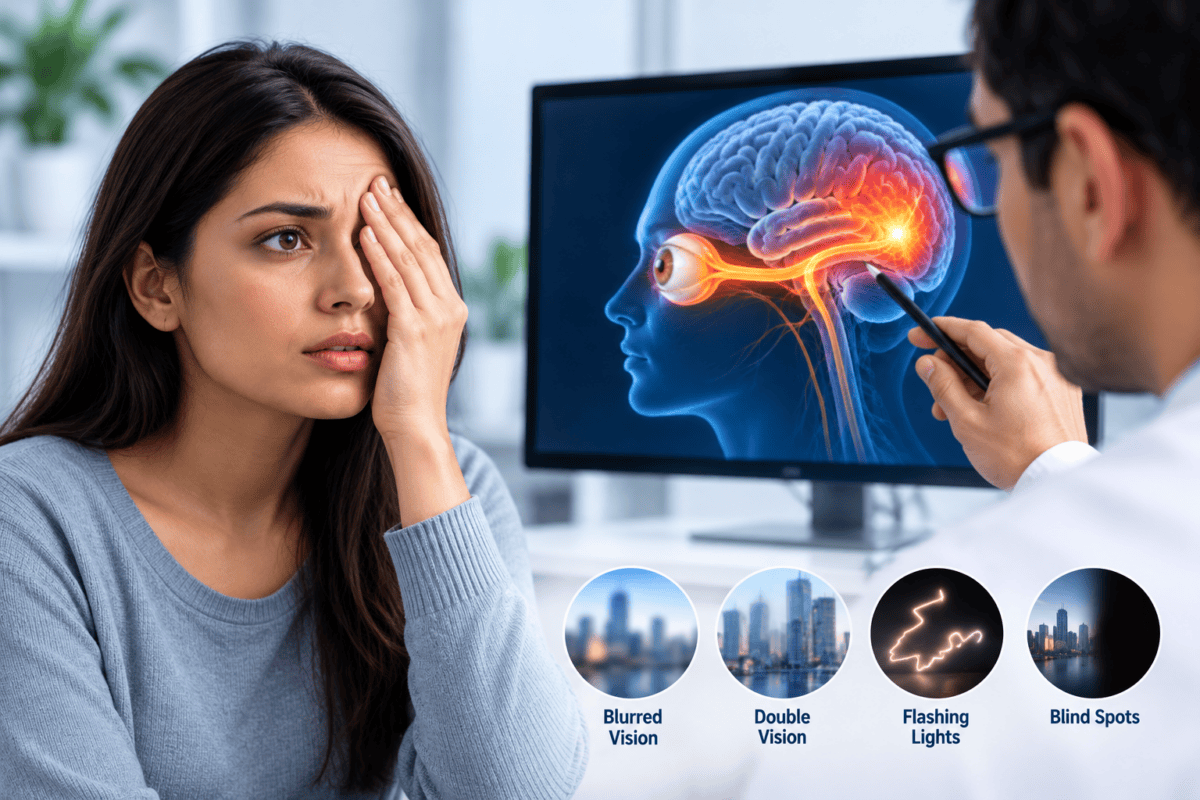
What Types of Vision Changes May Be Neurological?
Neurological vision symptoms can appear in different ways.
They may include:
- Sudden blurred vision
- Double vision
- Partial loss of vision
- Complete loss of vision in one or both eyes
- Flashing or shimmering lights
- Blind spots
- Difficulty seeing on one side
- Difficulty focusing the eyes together
- Abnormal eye movements
- Colors appearing less bright
- Pain with eye movement
- Vision changes associated with headache, weakness, or numbness
The pattern of the symptoms can provide important clues about where the problem may be occurring.
Could Sudden Vision Loss Be a Stroke?
Yes.
A stroke affecting the areas of the brain responsible for vision can cause sudden visual changes.
Possible symptoms may include:
- Loss of vision on one side
- Missing part of the visual field
- Sudden double vision
- Difficulty coordinating eye movements
- Vision loss accompanied by weakness or numbness
- Difficulty speaking
- Loss of balance or severe dizziness
Sometimes temporary vision loss may occur during a transient ischemic attack (TIA), often called a mini-stroke.
Even if the symptoms disappear within minutes, they should not be ignored.
Call 911 immediately if sudden vision changes occur with:
- Facial drooping
- Weakness or numbness on one side
- Difficulty speaking
- Severe dizziness or loss of balance
- Confusion
- A sudden severe headache
Stroke treatment is highly time-sensitive.
What Is Optic Neuritis?
Optic neuritis is inflammation of the optic nerve, which carries visual information from the eye to the brain.
Symptoms may include:
- Reduced vision in one eye
- Blurred vision
- Colors appearing faded
- A dark or blurry area in the center of vision
- Pain when moving the eye
Optic neuritis can occur on its own but may also be associated with neurological conditions such as multiple sclerosis.
A neurological evaluation and imaging may be recommended depending on the symptoms.
Can Migraine Cause Vision Changes?
Yes.
Some people experience neurological visual symptoms as part of a migraine aura.
These may include:
- Flashing lights
- Zigzag patterns
- Shimmering areas
- Blind spots
- Temporary visual distortion
Migraine aura often develops gradually and usually resolves.
However, a new or unusual visual disturbance should not automatically be assumed to be migraine, especially if the symptoms appear suddenly or differ significantly from previous episodes.
Sudden vision loss, particularly in one eye, should receive urgent medical evaluation.
Why Can Neurological Problems Cause Double Vision?
Double vision can occur when the eyes are not properly aligned.
Several cranial nerves control the muscles that move the eyes. Problems affecting these nerves, the brainstem, or the muscles themselves can interfere with coordinated eye movement.
Possible neurological causes include:
- Cranial nerve palsy
- Stroke
- Multiple sclerosis
- Myasthenia gravis
- Brain or nerve compression
- Head injury
New, persistent double vision should be medically evaluated.
Can Multiple Sclerosis Affect Vision?
Yes.
Vision problems are sometimes among the early symptoms of multiple sclerosis.
Possible symptoms include:
- Optic neuritis
- Double vision
- Blurred vision
- Abnormal eye movements
Vision symptoms alone do not mean a person has multiple sclerosis, but they may lead a neurologist to perform additional testing when other findings suggest a neurological cause.
Can Increased Pressure in the Brain Affect Vision?
Increased pressure inside the skull can sometimes affect the optic nerves.
Symptoms may include:
- Headaches
- Temporary episodes of blurred or darkened vision
- Double vision
- Nausea or vomiting
- Pulsing sounds in the ears
An eye examination may reveal swelling of the optic nerve, sometimes called papilledema.
This requires medical evaluation to determine the underlying cause.
Are All Sudden Vision Problems Neurological?
No.
Many vision problems originate within the eye itself.
Possible eye-related causes include:
- Retinal detachment
- Retinal blood vessel blockage
- Glaucoma
- Eye injury
- Inflammation or infection
Some of these conditions are also medical emergencies.
For this reason, sudden or significant vision loss may require evaluation by an emergency department, ophthalmologist, neurologist, or a combination of specialists, depending on the symptoms.
When Should You See a Neurologist?
A neurological evaluation may be appropriate when vision changes occur with:
- Persistent or unexplained double vision
- Vision loss associated with neurological symptoms
- Pain with eye movement
- Recurrent episodes of visual disturbance
- Weakness or numbness
- Balance problems
- Severe or unusual headaches
- Abnormal eye movements
- A history suggesting optic nerve or brain involvement
A neurologist can help determine whether the problem may originate from the optic nerves, brain, or another part of the nervous system.
How Are Neurological Vision Problems Evaluated?
Evaluation usually begins with a detailed history and neurological examination.
Your healthcare provider may ask:
- Did the change affect one eye or both?
- Did it happen suddenly or gradually?
- How long did it last?
- Was there pain?
- Did you experience headache, weakness, or numbness?
- Have similar episodes happened before?
Depending on the situation, testing may include:
Neurological Examination
Checks strength, sensation, coordination, reflexes, balance, and eye movements.
Eye Examination
May evaluate visual acuity, pupils, eye movement, retina, and optic nerves.
MRI
MRI of the brain or optic nerves may be recommended when inflammation, stroke, multiple sclerosis, or another neurological cause is suspected.
Blood Tests
Certain blood tests may be used to look for inflammation, infection, metabolic conditions, or other contributing factors.
Additional Testing
Some patients may require vascular imaging or specialized ophthalmologic testing depending on the symptoms.
Not everyone needs every test.
When Are Vision Changes an Emergency?
Seek immediate medical attention for:
- Sudden loss of vision
- Sudden loss of part of the visual field
- New double vision with weakness or difficulty speaking
- Vision changes after head trauma
- Severe headache with neurological symptoms
- Sudden dizziness and difficulty walking
- Vision loss accompanied by facial drooping or one-sided weakness
Do not wait for these symptoms to improve on their own.