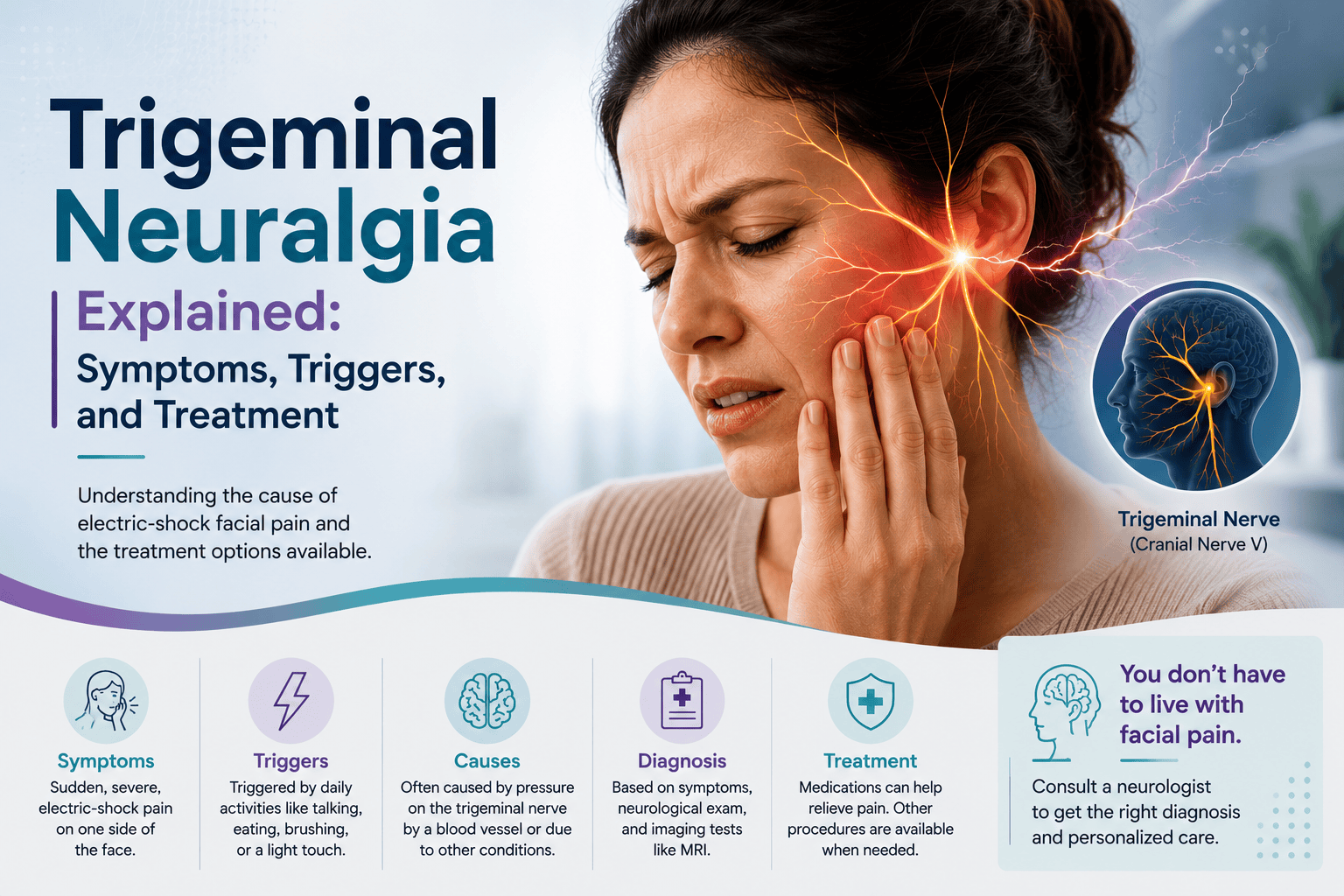
Severe facial pain that feels like an electric shock can be frightening—especially when it appears suddenly during simple activities such as brushing your teeth, eating, talking, or touching your face.
One possible cause is trigeminal neuralgia, a chronic pain condition involving the trigeminal nerve, which carries sensation from the face to the brain. The pain usually affects one side of the face and can involve the cheek, jaw, teeth, gums, lips, or, less commonly, the forehead and eye area.
What Does Trigeminal Neuralgia Feel Like?
Trigeminal neuralgia often causes:
- Sudden, intense facial pain
- Electric-shock or stabbing sensations
- Pain lasting from seconds to a few minutes
- Repeated attacks throughout the day
- Pain affecting one side of the face
- Periods when symptoms disappear and later return
For some people, the attacks gradually become more frequent or intense over time.

What Can Trigger the Pain?
Even very light stimulation of the face can sometimes trigger an episode.
Common triggers may include:
- Brushing your teeth
- Chewing or eating
- Talking
- Washing your face
- Shaving
- Smiling
- Applying makeup
- Drinking
- A light breeze touching the face
The fact that normal activities can trigger severe pain is one of the features that can help distinguish trigeminal neuralgia from other types of facial pain.
What Causes Trigeminal Neuralgia?
In many cases, a blood vessel presses against the trigeminal nerve near the brain, interfering with normal nerve function.
Other possible causes include:
- Multiple sclerosis
- A tumor pressing on the trigeminal nerve
- Previous facial or nerve injury
- Certain neurological conditions
Sometimes no clear underlying cause can be identified.
Why Can Trigeminal Neuralgia Be Mistaken for Dental Pain?
Because the trigeminal nerve supplies sensation to the jaw, teeth, and gums, the pain can sometimes feel as though it is coming from a tooth.
Some patients initially seek dental care before realizing that the pain may be neurological.
Persistent or repeated shock-like facial pain—especially when dental examination does not reveal a clear cause—may warrant neurological evaluation.
How Is Trigeminal Neuralgia Diagnosed?
Diagnosis depends heavily on the pattern, location, intensity, duration, and triggers of the pain.
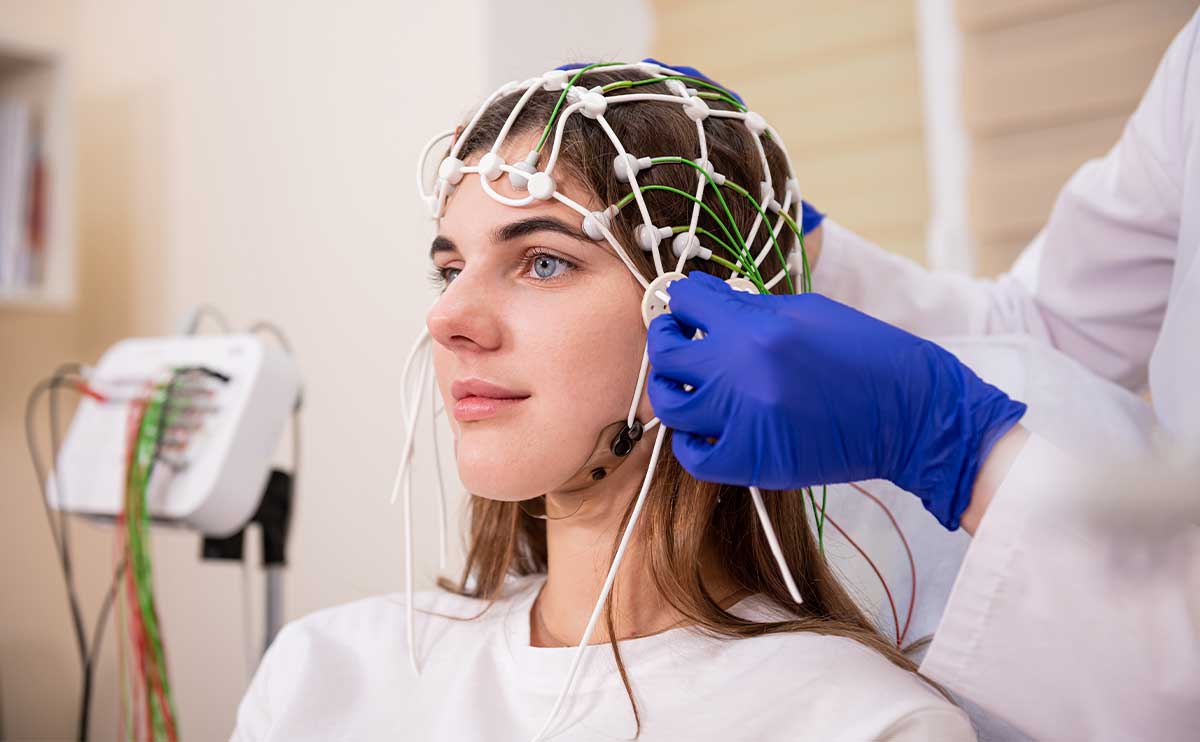
A neurologist may perform a neurological examination to determine which part of the trigeminal nerve may be involved.
An MRI may also be recommended to look for possible causes such as:
- Pressure from a blood vessel
- Multiple sclerosis
- A tumor or another structural abnormality
Because several conditions can cause facial pain, identifying the correct diagnosis is important before treatment begins.
How Is Trigeminal Neuralgia Treated?
Treatment usually begins with medication designed to reduce abnormal nerve signaling.
Certain anti-seizure medicines, including carbamazepine or oxcarbazepine, are commonly used as first-line treatments. Other medications may be considered depending on symptoms, response, and side effects.
When medication does not provide adequate relief, specialist treatment may include procedures designed to reduce abnormal pain signals from the trigeminal nerve.
Options can include:
- Microvascular decompression
- Stereotactic radiosurgery
- Radiofrequency procedures
- Balloon compression
- Other nerve-directed treatments
The appropriate treatment depends on the underlying cause, overall health, severity of symptoms, and response to medication.
When Should You See a Neurologist?
Consider neurological evaluation if you experience:
- Repeated episodes of severe facial pain
- Electric-shock-like pain on one side of the face
- Pain triggered by touching, eating, or brushing your teeth
- Facial pain that continues despite dental treatment
- Increasingly frequent or severe attacks
- Pain that significantly interferes with eating, speaking, sleeping, or daily activities
A neurologist can help determine whether the trigeminal nerve is involved and whether additional testing or treatment is appropriate.
When Facial Pain Needs Immediate Attention
Not all sudden facial symptoms are trigeminal neuralgia.
Seek urgent medical care if facial pain or unusual sensations occur with:
- Facial drooping
- Arm or leg weakness
- Difficulty speaking
- Sudden vision changes
- Severe loss of balance
- Confusion
- A sudden severe headache
These symptoms may indicate a neurological emergency and should not wait for a routine appointment.
Severe Facial Pain Should Not Be Ignored
Trigeminal neuralgia can significantly affect eating, speaking, personal care, and quality of life. Fortunately, several treatment options are available.
If you are experiencing repeated episodes of sudden, shock-like facial pain, consider speaking with a neurologist. Identifying the source of the pain is the first step toward finding an appropriate treatment plan.
This article is intended for general educational purposes and does not replace professional medical advice, diagnosis, or treatment.