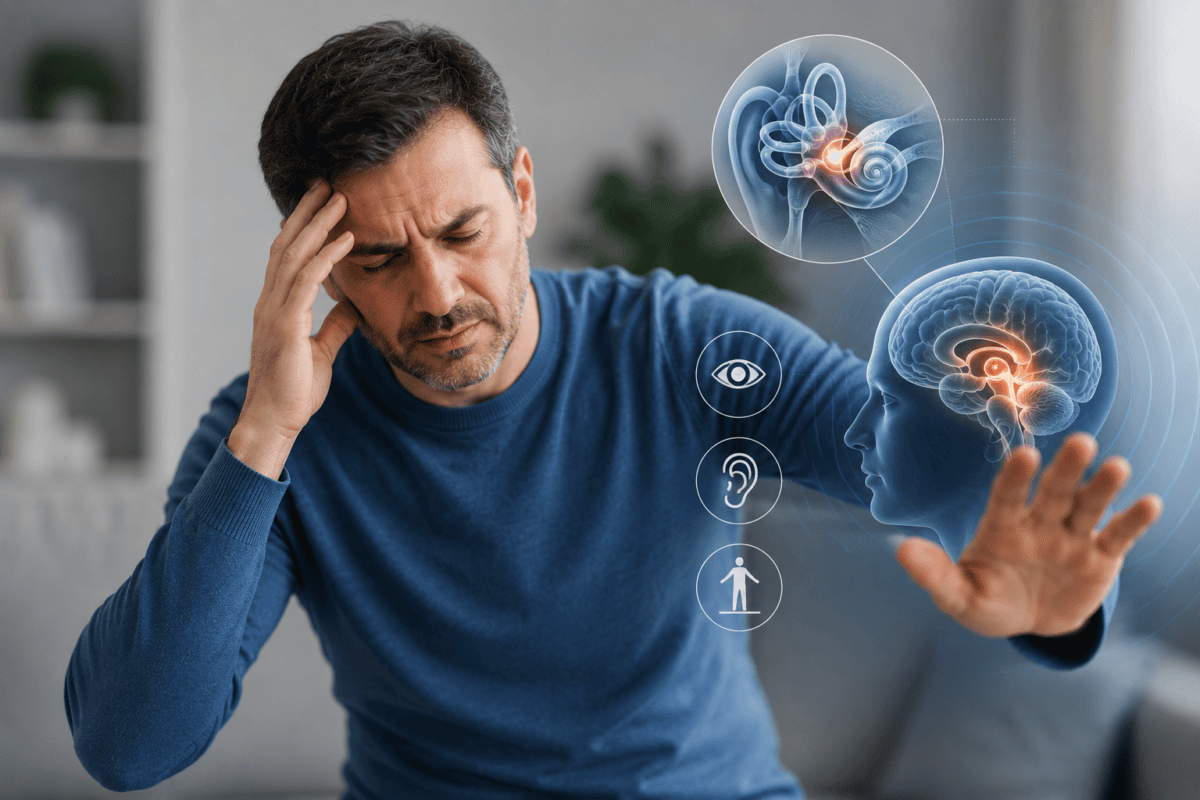

A sudden spinning sensation, feeling unsteady while walking, or repeatedly feeling as though the room is moving can be unsettling. While dizziness is common, recurring vertigo or balance problems may sometimes point to an issue involving the inner ear, migraine pathways, or the nervous system.
Understanding what your dizziness feels like, when it occurs, and what symptoms appear with it can help determine whether further evaluation is appropriate.
Is It Dizziness or Vertigo?
People often use the words dizziness and vertigo interchangeably, but they can describe different experiences.
Dizziness may feel like:
- Light-headedness
- Unsteadiness
- Feeling faint
- Difficulty maintaining balance
Vertigo usually creates a false sensation of movement, such as:
- The room spinning
- Feeling as though you are turning or tilting
- A sensation of movement while sitting or lying still
This distinction can help your healthcare provider narrow down the possible cause.
What Can Cause Vertigo and Balance Problems?
Balance depends on several systems working together, including the inner ear, eyes, brain, nerves, and muscles. A problem in any of these areas may produce dizziness or unsteadiness.
Inner-Ear Problems
The inner ear contains structures that help your brain understand movement and body position.
Common causes of vertigo can include:
- Benign paroxysmal positional vertigo (BPPV)
- Vestibular neuritis
- Labyrinthitis
- Ménière’s disease
BPPV often causes brief episodes of spinning after turning in bed, looking upward, bending down, or changing head position.
Vestibular Migraine
Some people experience vertigo or balance problems as part of a migraine disorder.
Symptoms may include:
- Motion sensitivity
- Vertigo
- Nausea
- Light or sound sensitivity
- Unsteadiness
A headache does not always have to be present.
Neurological Causes
In some cases, dizziness or balance difficulty may be related to conditions involving the brain or nervous system.
Possible causes can include:
- Stroke or transient ischemic attack
- Multiple sclerosis
- Certain movement disorders
- Previous head injury
- Other conditions affecting coordination or balance
This is why persistent or unusual dizziness should not always be assumed to be an inner-ear problem.
When Should Dizziness Be Evaluated?
Consider scheduling an evaluation when dizziness or vertigo:
- Keeps returning
- Lasts longer than expected
- Is becoming more frequent
- Causes difficulty walking
- Leads to falls or near-falls
- Occurs with frequent migraines
- Is associated with numbness or weakness
- Causes double vision
- Interferes with driving, work, or everyday activities
- Continues despite treatment for an inner-ear condition
The pattern of symptoms can provide important clues about whether the problem is vestibular, neurological, cardiovascular, or related to another condition.
What Happens During a Vertigo or Balance Evaluation?
Your clinician will usually begin by asking questions such as:
- When did the dizziness begin?
- Does the room feel like it is spinning?
- How long does each episode last?
- Does changing head position trigger symptoms?
- Are headaches or migraines present?
- Have you noticed hearing changes?
- Are there problems with walking or coordination?
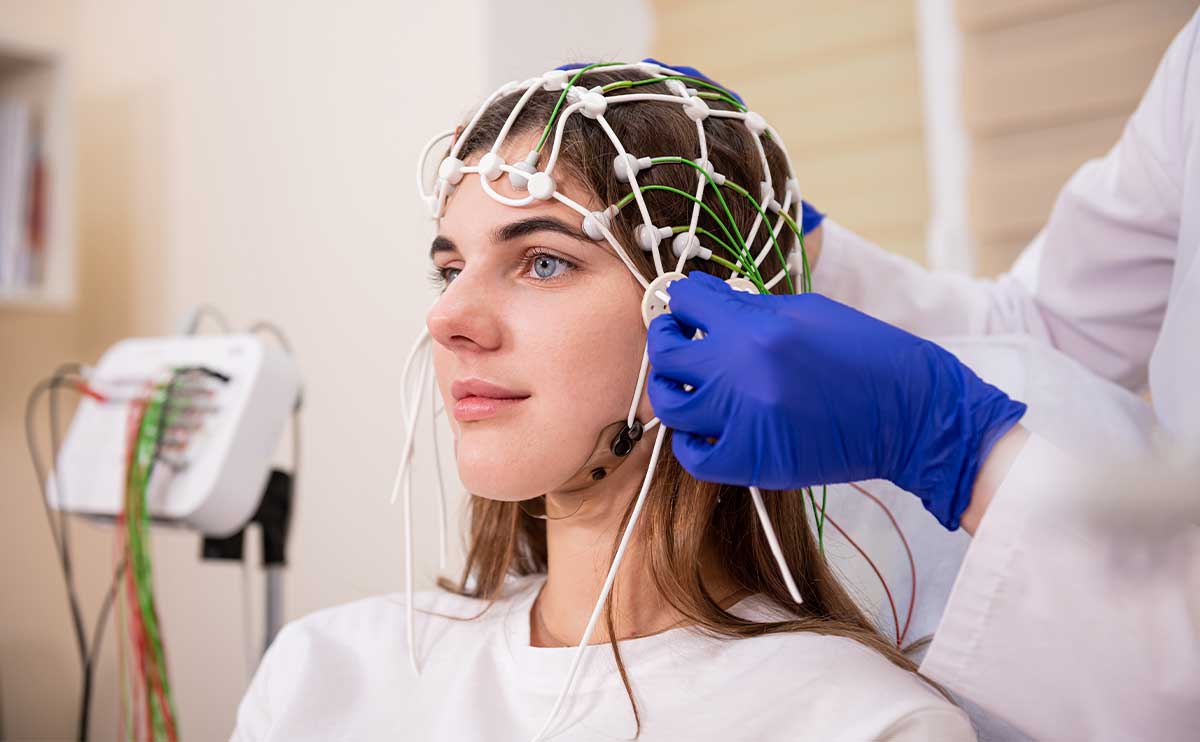
The examination may include assessment of:
- Eye movements
- Walking and balance
- Coordination
- Reflexes
- Muscle strength
- Sensation
- Head-position-related symptoms
Depending on the findings, additional testing may be recommended.
Will You Need an MRI or Balance Testing?
Not everyone with vertigo needs brain imaging.
An MRI or other imaging test may be considered when symptoms are unusual, persistent, accompanied by neurological findings, or when a central nervous-system cause needs to be investigated.
Other testing may include:
- Hearing evaluation
- Vestibular testing
- Eye-movement testing
- Blood testing
- Additional neurological testing
The appropriate tests depend on what your examination suggests.
How Are Vertigo and Balance Problems Treated?
Treatment depends on the underlying cause.
Repositioning Maneuvers
When BPPV is responsible, specific head and body movements may help reposition tiny inner-ear particles and reduce vertigo.
Vestibular Rehabilitation
Vestibular therapy uses targeted exercises to improve balance, reduce motion sensitivity, and help the brain adapt to abnormal balance signals.
Migraine Management
When vestibular migraine is involved, treatment may include migraine prevention strategies, medications, lifestyle changes, and trigger management.
Treatment of an Underlying Neurological Condition
If dizziness is related to a neurological disorder, treatment focuses on the specific condition causing the symptoms.
Simply suppressing dizziness with medication without determining the cause may not be appropriate when symptoms repeatedly return.
When Is Dizziness an Emergency?
Some combinations of symptoms require immediate medical attention.
Call 911 or seek emergency care if sudden dizziness or vertigo occurs with:
- Facial drooping
- Weakness or numbness on one side
- Difficulty speaking
- Sudden double vision or vision loss
- Severe difficulty walking
- Loss of coordination
- A sudden severe headache
- Confusion
- Fainting or loss of consciousness
These symptoms can be associated with a stroke or another neurological emergency and should not wait for a routine appointment.
Trying to Understand Your Dizziness or Balance Problems?
Recurring dizziness can have many possible causes, and the symptoms are not always easy to distinguish on your own. The important step is determining whether the problem is coming from the inner ear, migraine pathways, the nervous system, or another medical condition.
If you are an Oviedo resident experiencing recurring vertigo, unexplained dizziness, or increasing balance problems, a neurological evaluation can help identify the possible cause and determine whether additional testing or treatment is appropriate.
If your symptoms are persistent, worsening, or interfering with your daily activities, consider scheduling an evaluation at our Oviedo location.
This article is intended for educational purposes and is not a substitute for professional medical advice, diagnosis, or treatment.